

What Is AI Voice Cloning and How Do Scammers Use It

AI voice cloning replicates your voice from just ten seconds of audio using deep learning technology. Scammers harvest voice data from social media, phone calls, and public videos. They process samples within hours, achieving 95% accuracy for impersonation. Family emergency scams exploit emotional triggers, pressuring victims into wire transfers or cryptocurrency payments—77% fall victim. A bank manager authorized $35 million based solely on a cloned voice. Verify callers through known numbers and predetermined safe words. The specifics of protection strategies and detection methods reveal critical defenses you’ll want to understand completely.
What You Should Know
- AI voice cloning uses deep learning to analyze acoustic features like pitch and tone from short audio samples to generate synthetic voices.
- Scammers harvest voice data from social media, hacked databases, deceptive phone calls, and audio scraping to obtain cloning samples.
- Cloned voices can achieve 95% accuracy in hours, making them suitable for impersonation in emergency scams and authority fraud schemes.
- Family emergency scams exploit emotional manipulation with cloned familiar voices to pressure victims into immediate wire transfers or cryptocurrency payments.
- Prevention requires callback verification using known numbers, predetermined safe words, personal question verification, and monitoring for speech pattern irregularities.
How AI Voice Cloning Works?
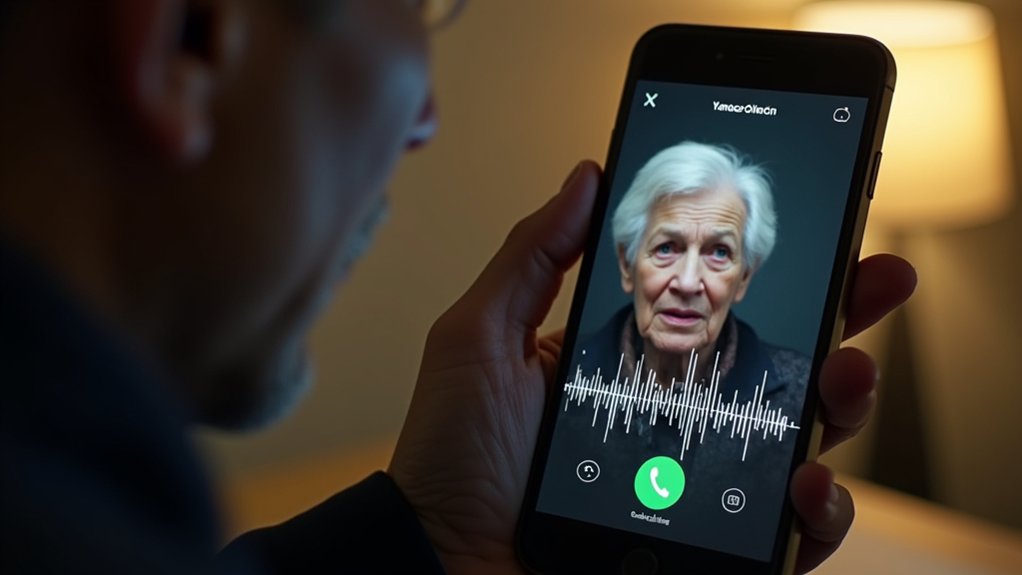
Every single day, artificial intelligence systems are becoming frighteningly good at copying human voices. The process starts with data collection. Scammers gather audio recordings as short as ten seconds to capture target speakers.
Voice recognition technology analyzes these samples, extracting acoustic features like pitch, tone, and rhythm. Next comes preprocessing. Background noise gets filtered. Speech segments into phonemes for pattern analysis.
Voice recognition extracts acoustic features like pitch, tone, and rhythm, while preprocessing filters noise and segments speech into phonemes for analysis.
Feature extraction generates spectrograms showing frequency variations over time. Deep learning models then train on this data using neural networks and transformers. Synthetic speech advancements enable rapid voice synthesis through TTS technology like FastSpeech. Zero-shot models allow scammers to clone voices with minimal training data through speaker adaptation techniques. Modern AI voice models break down voice samples into intonation, pitch, cadence, and pronunciation to achieve remarkable realism.
Vocoders generate raw audio waveforms that sound eerily human. The entire process takes hours. Suddenly, anyone can impersonate anyone else. That’s the terrifying reality of modern voice cloning capabilities.
Three Ways Scammers Steal Voice Data to Clone You?
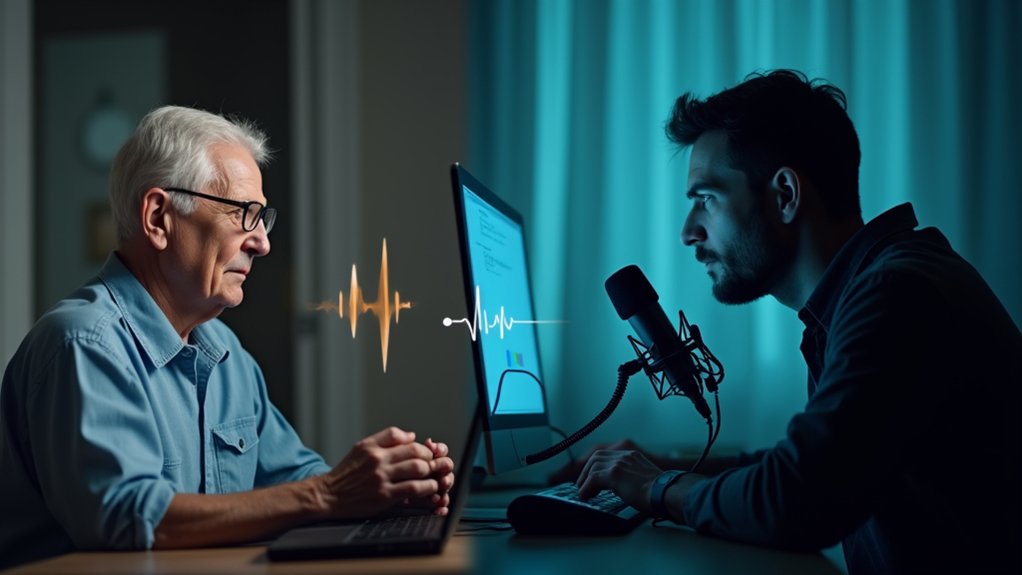
Scammers obtain voice samples through three primary methods: harvesting public social media videos where unsuspecting people post clips of themselves or family members speaking freely.
Hackers infiltrate databases and purchase stolen phone records bundled with audio files from previous breaches, giving criminals ready-made voice blueprints.
Deceptive phone calls—where scammers pose as survey takers or bank representatives—trick victims into speaking long enough to capture vocal patterns for cloning. Once scammers have collected sufficient voice data, machine learning technology processes the audio to create synthetic versions that can convincingly simulate the target’s voice across different accents, genders, and ages. This technology is particularly dangerous for older individuals who may be less familiar with these advanced deception tactics and more susceptible to emotional manipulation during fraudulent calls.
Public Social Media Harvesting
Most people don’t realize that their voice is being collected right now, piece by piece, from the posts they share online.
Scammers use social media trends to locate voice data everywhere. They scrape public videos from TikTok and Instagram without permission. Comments with audio clips get harvested instantly. Reviews on platforms like Yelp contain voice recordings ripe for theft. By utilizing social listening tools, scammers monitor conversations across multiple platforms to identify and target voice samples that contain the specific acoustic characteristics they need.
Reddit discussions yield unprompted voice samples through keyword searches. Real-time monitoring tools track mentions across thirty platforms simultaneously. User privacy vanishes when posts go public. Audio feature extraction techniques enable scammers to identify critical voice attributes like pitch and frequency from these collected samples.
Criminals extract audio features in seconds. They build cloning models from collected fragments. The process happens invisibly. Your casual video post becomes raw material for impersonation.
Stop sharing unprotected audio online immediately.
Hacking And Theft Methods
Vulnerability runs deeper than most people understand. Scammers use three primary methods to steal voice data for cloning attacks.
Data breaches expose millions. The 2024 National Public Data hack compromised 3 billion people’s information. Stolen records get paired with voice clips for voice phishing schemes. Cybercriminals buy breached databases containing names, addresses, and phone numbers online.
Audio theft happens constantly:
- Voicemail greetings: Attackers access public voicemail without authentication to harvest voice samples.
- Conference recordings: YouTube webinars and podcasts provide 10-second clips yielding 95% voice matches.
- Corporate websites: Executive messages and embedded audio files enable rapid voice synthesis.
- Social media: Public videos generate exploitable voice data through audio manipulation.
These methods require minimal effort. Scammers need only seconds of clear audio. They combine stolen personal data with voice samples, creating convincing impersonations. AI voice cloning requires just a few minutes of recorded audio to generate synthetic outputs that mimic tone, cadence, and inflection convincingly. The attack happens fast.
Advanced algorithms analyze these audio samples to extract and replicate unique vocal characteristics with remarkable precision. Protection demands immediate action: remove voicemail greetings, limit public recordings, monitor online presence.
Deceptive Phone Call Tactics
While most people worry about hackers stealing passwords, criminals are quietly collecting something far more dangerous: your voice.
Scammers use deceptive tactics during call scams by asking innocent questions like “Can you hear me?” to capture your “yes” response. They record extended conversations, gathering intonation patterns and emotional tones. Every word matters.
Voicemail greetings become targets too. A simple greeting provides enough audio for cloning—85 to 95 percent voice match using basic tools. Modern GANs can successfully clone voices with as little as three seconds of audio. Criminals combine these recordings with spoofed caller IDs for callback traps. These altered videos or photos can then be used to impersonate you in additional scams beyond the initial voice theft.
The danger escalates quickly. Those samples bypass voice authentication systems. Banks won’t recognize the fraud.
Protect yourself now. Never confirm information during unexpected calls. Disable public voicemail greetings. Monitor social media sharing habits. Stay suspicious of casual questions seeking extended responses.
The Six-Step Process Scammers Use to Clone Your Voice?
Scammers start by collecting voice data from public sources like social media videos, podcasts, and voicemails to gather the audio samples they need.
Next, they feed these short clips into artificial intelligence systems that analyze pitch, tone, cadence, and breathing patterns in just minutes using online services that cost as little as five dollars.
Within hours, the AI generates a cloned voice capable of achieving a 95% match, ready to deceive victims through fake emergency calls or authority impersonation.
Data Collection And Harvesting
Every day, millions of voice recordings exist online—waiting to be harvested. Scammers hunt for audio files across social media, podcasts, and video platforms with minimal effort required. They piece together short clips from various sources into convincing voice samples. No consent. No notification. Just theft.
The harvesting process exploits publicly available data:
- Social media videos and live streams containing extended speech
- Podcast episodes and professional presentations with clear audio quality
- Voicemails and pre-recorded messages accessible through data breaches
- Interview recordings and archived audio from news sources
Voice ethics disappear when scammers operate. Audio security fails silently.
They collect enough material within hours to create functional clones. Natural speech patterns become weapons. Quiet recordings become blueprints. Your voice becomes exploitable.
The danger escalates daily.
Model Training And Synthesis
Once scammers collect enough voice samples, the real threat begins. They feed recordings into advanced AI systems.
These systems learn your unique voice patterns in 20 minutes to several hours. Deep learning networks analyze your pitch, tone, and speech rhythm simultaneously. The AI creates a digital voice profile called a speaker embedding.
Model optimization happens through thousands of training cycles, sometimes reaching 50,000 steps. Each cycle makes the synthetic voice more convincing.
Voice synthesis transforms text into audio that sounds exactly like you. Scammers can now generate fake messages. They impersonate you calling banks, family members, or employers.
One victim lost $10,000 after criminals used voice synthesis to request wire transfers. The process is frighteningly efficient. Your cloned voice becomes a weapon against you.
How the “Family Emergency” Scam Unfolds in Real Time?

Within seconds of answering an incoming call, a parent’s world can collapse into panic. The scammer tactics unfold with surgical precision. A familiar voice cries out. A loved one needs help NOW.
The emotional manipulation intensifies rapidly:
- Caller claims a car accident, then escalates to kidnapping within moments
- Threats of harm or ransom demands flood the conversation
- Scammer pressures immediate payment via wire transfer or cryptocurrency
- Victim receives no time to verify or call back independently
The AI voice replicates crying perfectly. The spoofed number matches a family member’s contact. Rational thought evaporates.
According to 2023 data, 77% of recipients lose money. Parents wire funds in minutes. The scammer vanishes. Verification arrives too late.
One call. One cloned voice. One destroyed family. The prevention? A simple callback to a known number or a pre-arranged family safe word. Neither happened here.
The $35M Heist That Started With a Cloned Executive’s Voice?

A bank manager in the UAE authorized a $35 million transfer based on a single phone call. The voice sounded identical to the company director. Deepfake AI had cloned it perfectly.
Fraudsters combined voice recognition vulnerabilities with forged emails claiming an urgent acquisition. The manager knew the director’s voice from previous interactions, creating false confidence. Executive impersonation risks escalated dramatically.
Scammers initiated contact, discussed business details, sent confirmation emails from a fake lawyer. The manager processed fifteen transactions. Only later did verification with headquarters expose the fraud.
The attackers had sourced audio from public sources like YouTube and webinars. This $35 million heist represents the second successful voice cloning attack.
Companies must implement independent verification protocols. Never authorize transfers based solely on voice recognition alone.
Why Familiar Voices Make Us Skip Security Checks?
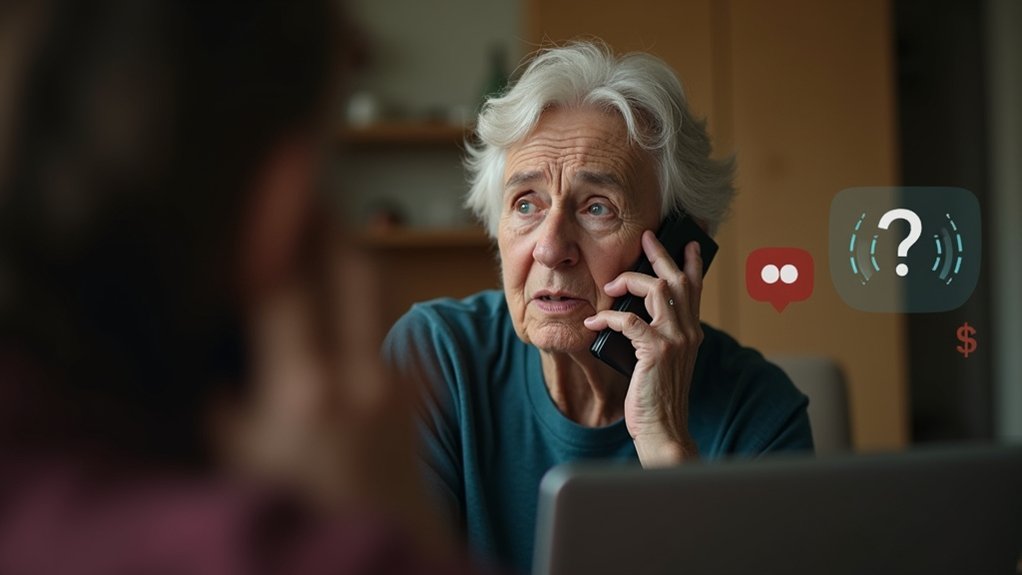
Why do people trust voices they recognize, even when alarm bells should ring? Familiarity bias makes our brains short-circuit logic. We hear a familiar voice and skip security checks entirely.
The psychological manipulation is devastating:
- Cloned voices of family members trigger emotional responses that override caution
- Victims 40% more likely to fall for scams when over 60 due to voice recognition patterns
- Anxiety and urgency convince people to share OTP codes despite 2FA protection
- 77% of AI voice scam victims lose money because trust clouds judgment
Our brains evolved to trust familiar sounds. Scammers exploit this ancient instinct ruthlessly. They weaponize emotional connections. One cloned sentence destroys years of security training. Recognition becomes liability.
The solution demands vigilance. Verify through separate channels. Never share codes over voice calls. Security requires skepticism, not familiarity.
Fear, Urgency, and Kinship: The Psychological Triggers Scammers Weaponize?
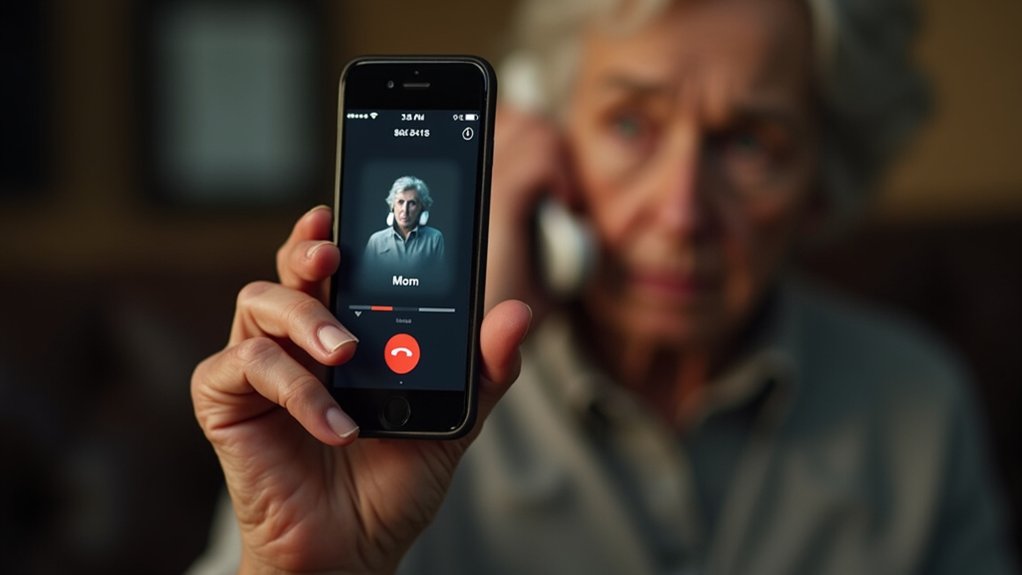
Panic is the scammer’s greatest weapon. Voice manipulation amplifies fear instantly. A cloned voice of your grandmother crying triggers immediate action. Urgency demands money within hours.
The scammer creates artificial deadlines: “Transfer funds before the account closes.” Time pressure prevents rational thinking. Psychological exploitation works because humans trust familiar voices instinctively.
Kinship scams pose as family members in distress. A son’s voice saying “Mom, I need bail money” bypasses every defense. Victims send thousands within minutes.
The scammer repeats the same message repeatedly, wearing down resistance. Stress from the fake emergency clouds judgment completely. Research shows 72% of voice cloning victims experience repeat victimization.
Protect yourself: verify unexpected requests through separate phone calls using known numbers.
How to Verify It’s Really Your Family Member Calling?
When the phone rings with a familiar voice begging for money, every second counts. Hang up immediately. Call back using a known personal phone number for the family member instead of the number provided in the suspicious call. This single step stops scammers cold.
Family verification requires specific tactics:
- Ask recent details only the real family member would know from the past week
- Listen for natural speech irregularities like breaths or pauses absent in AI clones
- Request random phrases impossible to pre-generate in deepfake audio
- Check for unnatural intonations common in voice recognition fraud
Reach out through another family member if direct contact fails. Establish prior emergency codes with relatives beforehand.
Voice cloning technology grows more convincing daily. Trust instinct. Verify identity. Never rush decisions involving money.
Protecting Yourself From Voice Clone Fraud?
How does someone protect themselves when a voice that sounds exactly like their parent suddenly demands money?
Hang up immediately. Call back using the official number from your phone contacts, not one the caller provided. This simple callback technique stops 99 percent of voice clone scams cold.
Enable voice verification through multi-factor authentication. Banks now use voice biometrics paired with hardware security keys like YubiKey, blocking nearly all attacks.
Establish secure communication protocols with family members beforehand. Create a unique safe word known only to trusted relatives. Change it monthly. Use it during unexpected financial requests.
Monitor for red flags: unnatural speech patterns, missing breaths, flat emotions, robotic repetition. Train yourself to recognize these markers. Your skepticism saves money. Your caution protects everyone.
People Also Ask
How Quickly Can Scammers Create a Voice Clone of Me?
How Quickly Can Scammers Create a Voice Clone of Me?
Scammers can replicate your voice in seconds to minutes. The speed of voice replication depends on the audio samples available to criminals. Basic scammer techniques require as little as three seconds of your audio to achieve an eighty-five percent match accuracy.
This means your voice is vulnerable from numerous sources—public videos, social media posts, voicemails, or recorded interviews. Scammers actively harvest this material to build convincing voice clones. Once criminals create a replica, they can use it to impersonate you in calls to your family, friends, and financial institutions, potentially causing significant financial and emotional harm.
Understanding this threat is your first line of defense. You should be aware that criminals are continuously refining these tools and that protection requires both awareness and action. If you suspect your voice has been cloned or misused, report it immediately to local law enforcement and the FBI’s Internet Crime Complaint Center.
Can Voice Cloning Technology Be Detected or Identified by Listeners?
Can Voice Cloning Technology Be Detected or Identified by Listeners?
Modern voice cloning technology presents significant voice recognition challenges. You likely cannot differentiate advanced clones from authentic sources through listening alone. Your awareness and caution help, but they’re not enough for reliable identification.
To protect yourself, you need AI detection tools. These tools analyze audio characteristics that human ears cannot perceive—such as subtle artifacts, unnatural speech patterns, or digital signatures—to identify synthetic voices. You should consider using these resources when you need to verify whether a voice recording is authentic, especially in situations involving financial requests or sensitive information.
Criminals exploit this detection gap by creating convincing voice clones for fraud, extortion, and impersonation scams. Scammers target you with cloned voices of trusted contacts—family members, business associates, or authority figures—to manipulate you into sending money or sharing confidential information.
You can reduce your risk by:
- Verifying requests through independent contact methods
- Asking questions only the real person would know
- Being skeptical of urgent financial or personal requests
- Using available audio authentication technology when available
- Reporting suspected voice cloning fraud to relevant authorities
Understanding these limitations helps you stay informed and prepared in an evolving threat landscape.
What Financial Institutions Are Most Targeted by Voice Cloning Fraud?
Ironically, the most sophisticated banking institutions with robust fraud prevention systems face heightened targeting by scammers. Large enterprises and financial operations suffer average losses exceeding $680,000 per deepfake incident, making them prime victims of voice cloning fraud.
As you evaluate your organization’s vulnerability, understand that criminals specifically target institutions with substantial assets and high-value transactions. These operations present lucrative opportunities for fraudsters employing voice cloning technology to impersonate executives, authorization personnel, or trusted contacts.
The paradox you should recognize: advanced security measures can create a false sense of protection. Scammers continuously adapt their tactics to circumvent existing defenses, particularly targeting the human verification layer—the moment when a voice sounds authentic enough to bypass initial skepticism.
Are Voice Cloning Scams Covered by Insurance or Bank Fraud Protection?
Voice Cloning Scams: Insurance and Bank Fraud Protection
Voice cloning scams typically lack explicit coverage under standard personal insurance policies. When criminals use cloned voices to impersonate you or someone you know, you’ll find that traditional homeowners or renters insurance doesn’t address this threat.
Bank fraud protection offers limited help because criminals often move stolen funds offshore within hours. By the time your bank identifies the fraudulent transaction, the money may already be beyond recovery reach.
To strengthen your protection, you should:
- Review your current insurance policies for cyber liability endorsements or riders that specifically address voice cloning and identity theft
- Ask your insurer whether they offer coverage for losses resulting from audio deepfakes or voice impersonation
- Contact your bank about their specific fraud reimbursement timeline and limitations for cases involving sophisticated social engineering
- Document all evidence of the scam, including recordings, communications, and transaction records—this documentation supports both insurance claims and potential law enforcement investigation
You may also want to file a complaint with the Federal Trade Commission (FTC) and your state’s attorney general office. These agencies track voice cloning incidents and can provide guidance on recovery resources available in your jurisdiction.
The reality is that you need proactive protection rather than relying solely on recovery after an incident occurs. Specific cyber coverage before an attack happens gives you the strongest position for both prevention and response.
Which Countries or Regions Experience the Highest Rates of Voice Cloning Scams?
North America and Europe represent the primary regional hotspots for voice cloning scams. Asia-Pacific also demonstrates significant scam prevalence, with deepfake fraud surging 194% in 2024. If you live in these regions, you should know that one-third of respondents reported encountering such fraud.
Scammers are increasingly targeting individuals across these areas by using artificial intelligence to replicate voices with alarming accuracy. You face particular risk in regions with high internet penetration and active financial services sectors, where criminals can access the technology and targets most easily.
Understanding where these scams concentrate helps you recognize your own vulnerability. Whether you’re in North America, Europe, or Asia-Pacific, you should remain vigilant about unsolicited calls requesting money or personal information, especially from individuals claiming to be family members or trusted contacts. Criminals exploit the difficulty you may have distinguishing authentic voices from synthetic replicas.
The Bottom Line
Voice cloning isn’t science fiction anymore. It’s happening now. Scammers steal your voice in seconds. They use it to drain bank accounts and shatter trust. You hear a loved one’s voice pleading for money. Your defenses crumble.
StopHarmNow.org tackles AI voice cloning scams head-on through free, accessible prevention education. We help you recognize deepfake threats, understand how criminals exploit this technology, and protect your voice before it can be weaponized against you. Our resources equip families with practical defenses against audio impersonation and synthetic voice fraud.
Verify every call. Ask unexpected questions. Hang up and call back directly. Stay sharp. Stay skeptical. Your voice—your identity—depends on it.
Your donation funds free prevention resources. Donate.
References
- https://www.resemble.ai/understanding-ai-voice-cloning/
- https://www.mcafee.com/blogs/privacy-identity-protection/artificial-imposters-cybercriminals-turn-to-ai-voice-cloning-for-a-new-breed-of-scam/
- https://lovo.ai/post/ai-voice-cloning-what-it-is-and-how-it-works
- https://www.countrybank.com/deepfakes-voice-cloning-how-to-spot-ai-imposter-scams-before-they-cost-you/
- https://www.mitnicksecurity.com/blog/ai-voice-cloning
- https://www.becu.org/blog/voice-cloning-ai-scams-are-on-the-rise
- https://elevenlabs.io/voice-cloning
- https://acarp-edu.org/three-examples-of-how-fraudsters-used-ai-successfully-for-payment-fraud-part-1-deepfake-audio/
- https://deepgram.com/learn/voice-cloning-everything-to-know
- https://www.sonarworks.com/blog/learn/ai-vocal-tools